
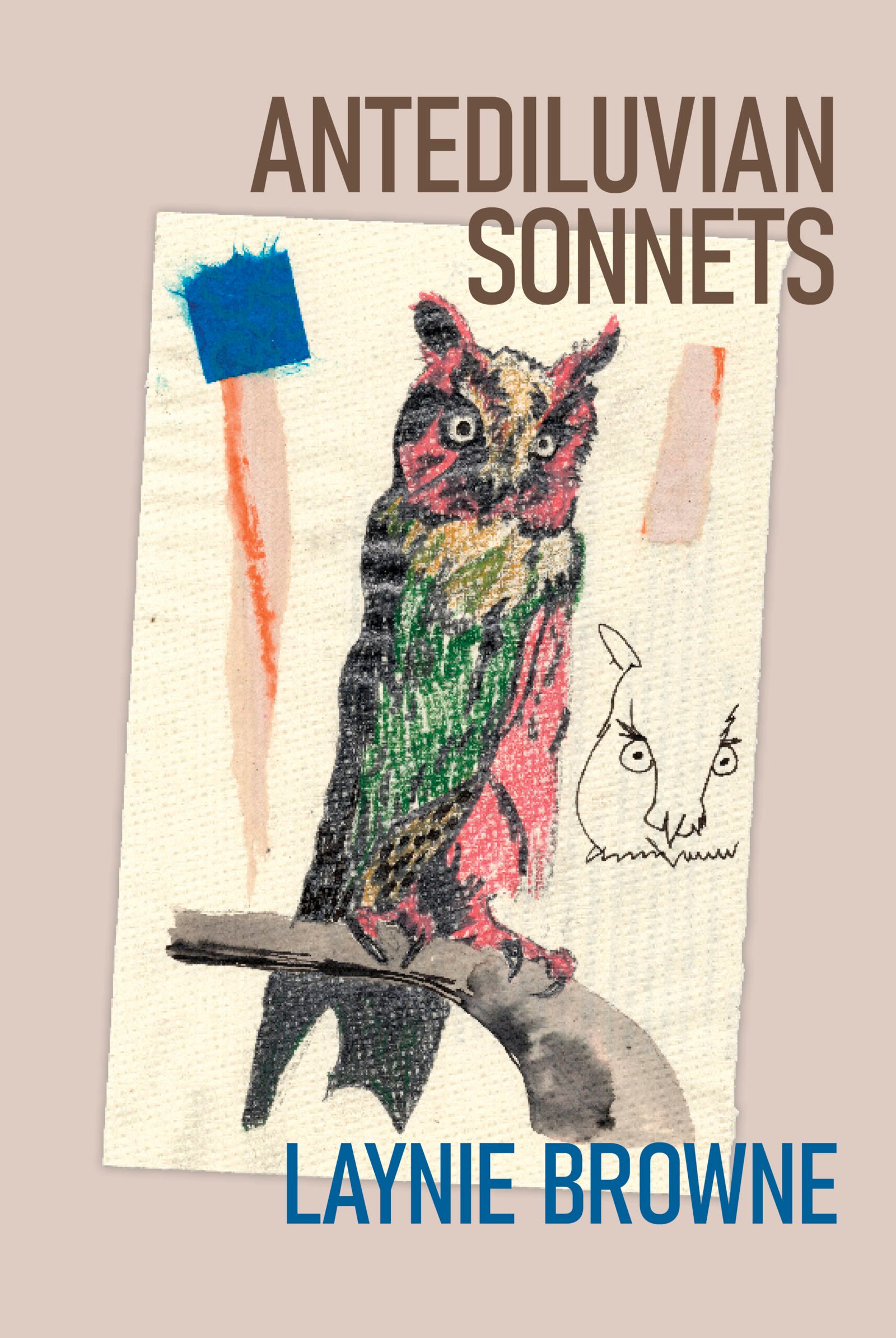
Description
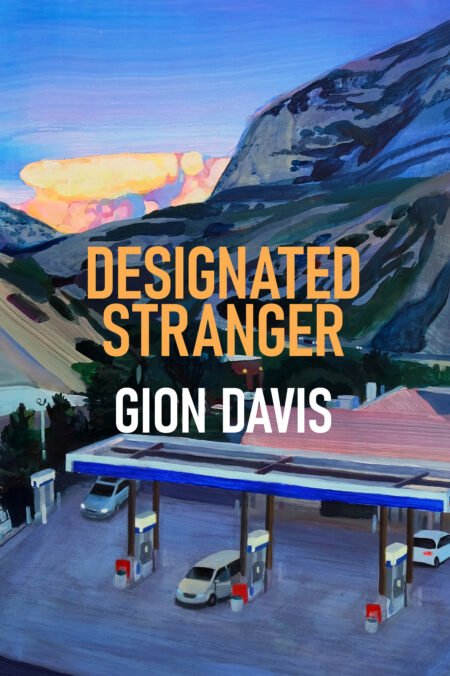
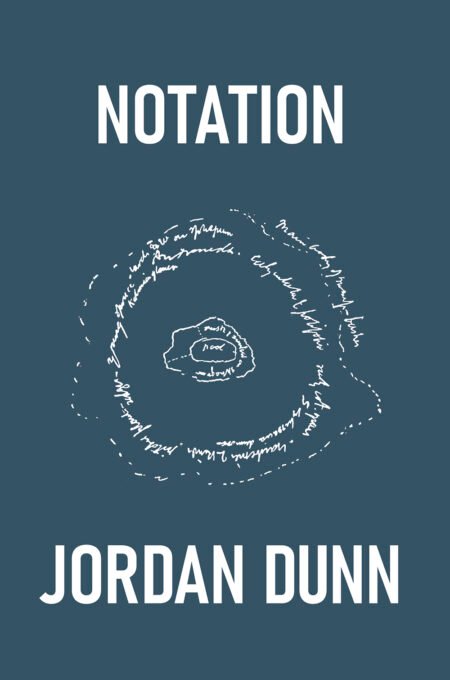
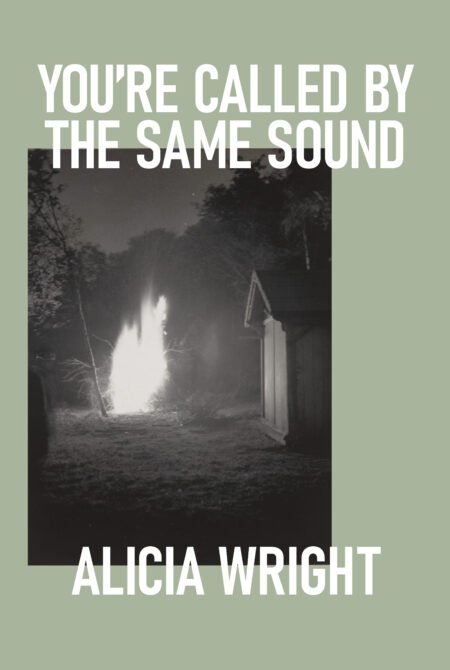
Preorders containing multiple titles will be bundled and shipped in August 2026.
Book Description
Antediluvian Sonnets sets out to reflect and refract the ways that time is constantly bent, especially through elegy. This book is also a love letter and homage text, tracing the lineage of experiments received from one mother of the modern sonnet, Bernadette Mayer. Loss is ageless, and transmutes the notion of any life being linear. Form is another way to consider time, another way for the ancient to become the future.
Praise
In Antediluvian Sonnets, Laynie Browne approaches the sonnet as a place of care and attention, devotion and grief. In this, her third book of sonnets, we stand on the banks of a river that has flooded, that is flooding, that will flood again. The trick isn’t so much to withstand disaster, which is always on its way, but to stand in it, open to what is lost and what is present at once. Like the sonnet itself—“a room without walls”—Browne is “trying to make space from space,” calling forth “the page and those congregated around the page.” And who are these congregants? The reader, of course, but also “wild strawberries,” “foxes,” “dreams,” “vibrations,” “orchids,” “bellow,” and “oracles.” Also in attendance is Bernadette Mayer, mother of the sonnet and Browne’s friend and dedicatee, whose laugh is a “location,” a gathering place. In these poems, Browne invites us to stand by the river with her and her companions. Though the banks are flooding, these poems do not give way to despair; “instead they embrace the calamity of love.” This is not Harold Bloom’s anxiety of influence paralyzing us; this is Laynie’s Browne’s ecstasy of influence beckoning us. Come forth, she says, “it’s not too late for signs, bullhorns, & noisemakers.” – SASHA STEENSEN
Antediluvian Sonnets is the story of a poet who, armed only with her pen pulls language out of the silence of loss, a poet undeterred by the impossibility of her task, who starts her journey over and anew with every poem in this wondering book. Mayer is there, infusing the atmosphere along with others of her dead, but the stars of this book are the poems themselves, a fleet of arrows loosed and lost into the distance. This is what poetry is and what it can do, a brief and shining magic made just by asking “Which words will come…” Laynie Browne is a poet at the height of her powers. – CHLOE GARCIA ROBERTS
Laynie Browne’s Antediluvian Sonnets calls us back to the origins of the form. Not the exalted sonnet. The popular sonnet, the fugitive sonnet; drinking song in an Italian tavern, scrap of foolscap, passed hand to hand at the Inns of Court. Not the sonnet as vehicle for male desire, objectifying, idealizing—Beatrice, Laura, Dark Lady. The sonnet as a space of female solidarity and desire: Lady Mary Wroth, Edna St. Vincent Millay, and above all, Bernadette Mayer, who is this book’s “fricative foremother” and to whom it speaks in a long cry of grief. Not, finally, the sonnet as the accomplishment of an isolate individual: “a…series of reactive letters / Written in the dark to no one,” as Browne writes. The sonnet as a collaborative practice, which entangles many voices, bodies, generations: “What we receive from the dead, / Unintelligible, but then the living / May also be unrecognizable.” – TOBY ALTMAN
About the Author
Laynie Browne is a poet, prose writer, teacher and editor. She is author of eighteen collections of poems and four books of fiction. Browne’s recent books of poetry include: Everyone & Her Resemblances (Pamenar, 2024), Intaglio Daughters (Ornithopter 2023), Practice Has No Sequel (Pamenar 2023). She co-edited the anthology I’ll Drown My Book: Conceptual Writing by Women (Les Figues Press) and edited the anthology A Forest on Many Stems: Essays on The Poet’s Novel (Nightboat). Her work has appeared in journals such as Conjunctions, A Public Space, New American Writing, The Brooklyn Rail, and in anthologies including The Ecopoetry Anthology (Trinity University Press), The Reality Street Book of Sonnets (Reality Street, UK), and Postmodern American Poetry: A Norton Anthology (W.W. Norton). Her poetry has been translated into French, Spanish, Chinese, and Catalan. Honors include a Pew Fellowship, the National Poetry Series Award for her collection The Scented Fox, and the Contemporary Poetry Series Award for her collection Drawing of a Swan Before Memory. She teaches at the University of Pennsylvania.
Excerpts & Reviews
“from Antediluvian Sonnets,” Amsterdam Review
“from Antediluvian Sonnets,” Annulet
“from Antediluvian Sonnets,” Cordite Poetry Review
“from Antediluvian Sonnets,” Three Fold Press

Reviews
There are no reviews yet.